
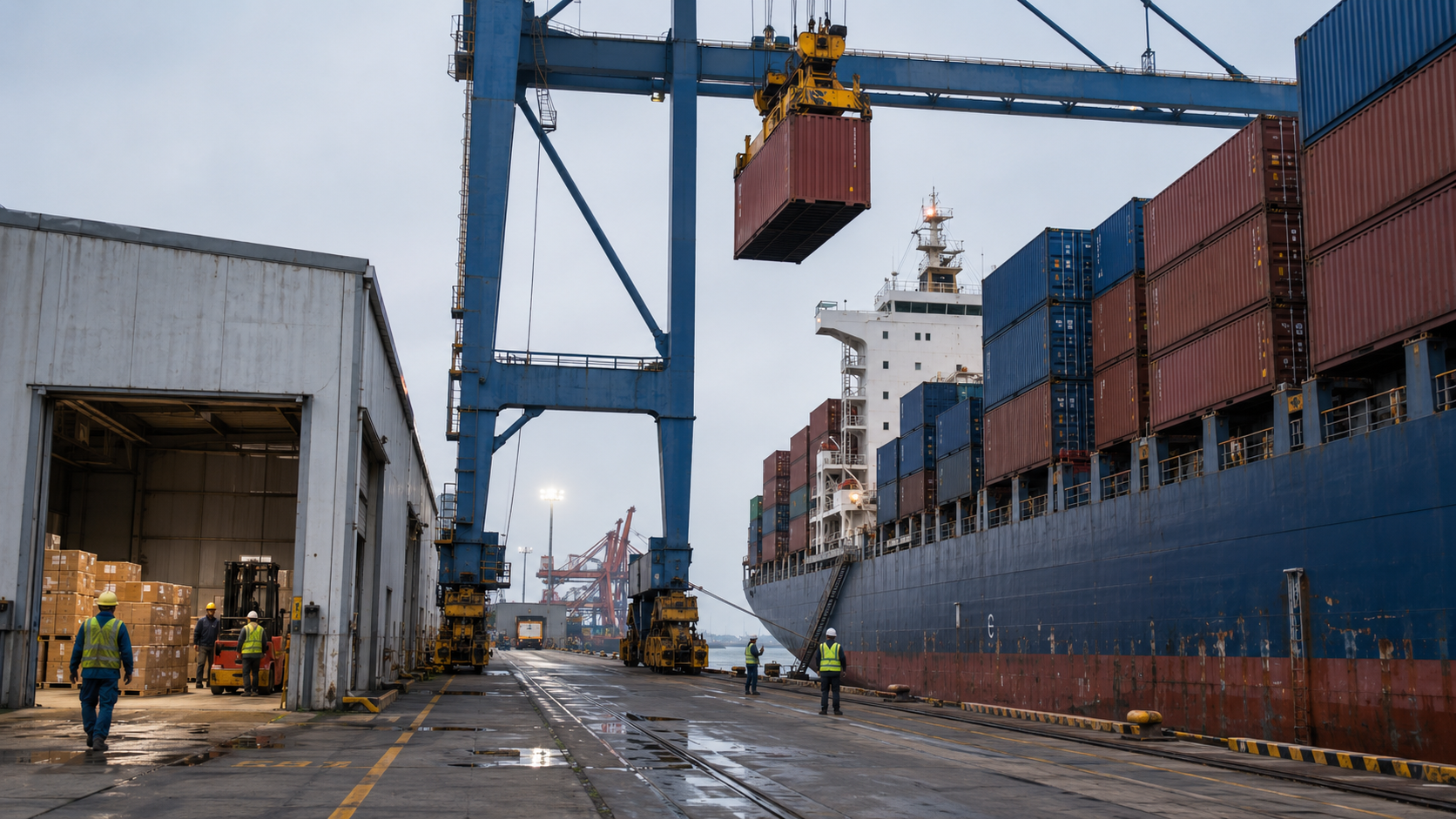
FCL and LCL are not simply two price points. They create different handling patterns, planning needs and exception risks, so the decision should begin with the cargo and the delivery commitment.
What changes with a full container
FCL uses equipment allocated to one shipper's cargo. It can simplify the origin and destination handling pattern when the shipment volume and equipment requirement support it.
The relevant comparison includes equipment availability, cargo loading plan, free time assumptions, delivery appointment requirements and whether the cargo is ready to move as one shipment.
- Often suitable for larger, container-ready volumes
- Requires a loading and equipment plan
- Still needs clearance and destination delivery coordination
What changes with consolidation
LCL combines compatible consignments in a container. It can be useful for smaller volumes, but consolidation creates additional handoffs at the origin and destination consolidation facilities.
Compare the complete service scope, including handling, documentation, destination release and delivery. A low headline rate does not describe every cost or operating dependency.
- Often considered for smaller volumes
- May involve more warehouse handling
- Needs accurate dimensions, weight and cargo information
Compare the same delivery outcome
Ask each provider to define the same origin, destination, cargo-ready date and delivery scope. Then compare timing assumptions, included charges, exception process and handoff ownership.
For fragile, high-value, temperature-sensitive or regulated cargo, handling exposure can matter as much as the quoted transport cost.
- Use actual package data, not estimates
- Confirm cargo restrictions before booking
- Check who owns the destination handoff
FREQUENTLY ASKED QUESTIONS
Questions to ask before booking.
Is FCL always faster than LCL?
Not automatically. FCL and LCL follow different origin and destination handling processes. The applicable schedule depends on the route, readiness date, service plan and handoffs.
When should I ask for both FCL and LCL options?
Ask for both when the cargo volume is near a practical equipment threshold or when delivery risk matters more than a single headline transport price.
Sources and further reading
These sources support the planning context. Product-specific customs, tax and regulatory requirements should be confirmed with the appropriate qualified adviser.