
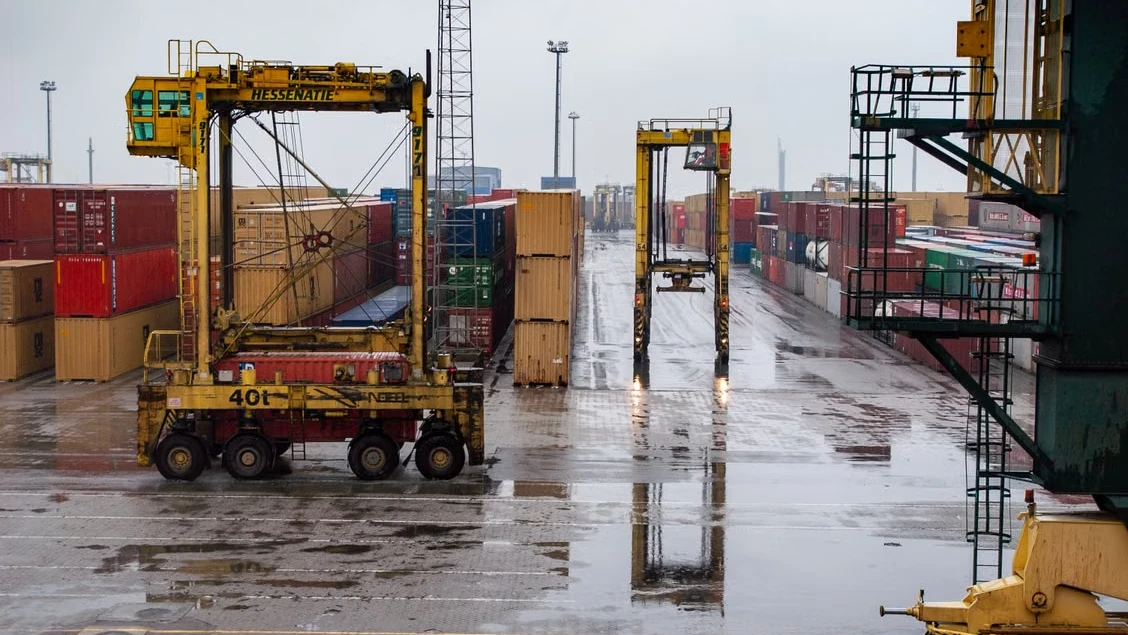
Shipping from China to Australia starts with three decisions: how soon the goods need to be available, what the complete delivery will cost, and whether the goods and packaging meet Australian import conditions. Air freight can support urgent orders; sea freight often suits planned replenishment and larger volumes. Neither option removes the need for customs and biosecurity checks.
Start with the same shipment details for every quote: the goods, final packed dimensions and weight, collection address, Australian delivery address, cargo-ready date and required delivery date. Then compare the complete journey, including clearance and delivery, rather than an airport arrival against a warehouse delivery.
Air or sea freight: which fits your shipment?
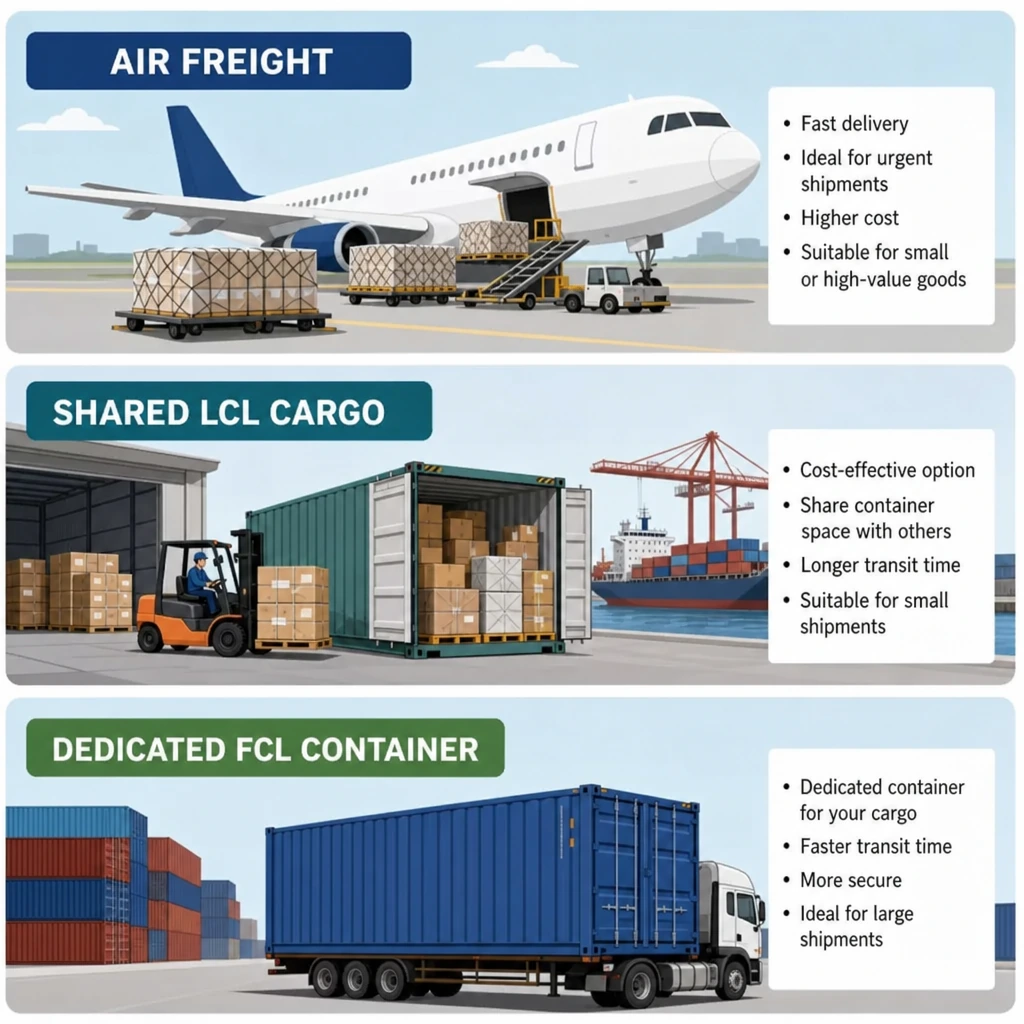
Choose the mode around the business deadline and cargo profile. There is no universal weight or volume at which one option becomes cheaper than another.
| Option | A useful starting point for | What drives the cost | What to confirm |
|---|---|---|---|
| Express courier | Samples and urgent parcels | Actual or volumetric weight, service level and surcharges | Goods acceptance, clearance scope and delivery coverage |
| Air freight | Urgent commercial cargo and replenishment | Chargeable weight, routing, handling and onward delivery | Cargo acceptance, available routing and the complete delivery schedule |
| Sea freight: LCL | Orders that do not need a dedicated container | Chargeable weight or volume, consolidation and local charges | Destination unpacking, handling and delivery costs |
| Sea freight: FCL | Orders suited to a dedicated container | Container rate, equipment, local charges and inland transport | Loading, free time, receiving access and empty-container return |
Air freight: use speed where it has a clear purpose
Air freight is worth comparing for a product launch, a replacement part or a shortage that cannot wait for the next sea shipment. However, bulky lightweight cartons can attract charges above their scale weight. Confirm the service's dimensional conversion, minimum charge and final packed measurements; our air freight chargeable-weight guide explains the calculation.
Ask for a schedule covering collection, export handling, flight routing, Australian clearance and delivery. If only part of an order is urgent, compare sending that quantity by air and the balance by sea. Include the extra bookings, documents and handling in the comparison.
LCL: shared space with more handling stages
Less-than-container-load (LCL) freight combines shipments into a shared container. It can suit smaller commercial orders, but the ocean rate is only part of the cost. Cargo needs consolidation at origin and unpacking at destination before onward delivery.
Request an itemised destination schedule covering unpacking, warehouse handling, release documentation and collection. Tell the forwarder if the goods are fragile, non-stackable or difficult to handle, since those details can affect acceptance and pricing.
FCL: dedicated equipment without a universal volume threshold
Full-container-load (FCL) freight uses a dedicated container. It can be worth comparing before the goods physically fill the equipment, particularly when handling requirements or local LCL charges affect the total. Use identical cargo facts and delivery scope when comparing FCL and LCL from China.
Confirm the loading plan, payload limits, destination access and unloading equipment. Dedicated space can reduce some handling stages, but it does not guarantee an earlier sailing, faster clearance or damage-free delivery.
What does shipping from China to Australia cost?
A useful quote needs more than the shipment's total weight. The final cartons or pallets, goods description, collection point, destination and service scope all affect the result. Ask each provider to identify what is included, excluded, estimated or payable only if a specific event occurs.
| Cost group | Items to verify |
|---|---|
| Goods and preparation | Purchase price, export packaging, pallets and any required treatment |
| China-side services | Collection, export formalities, warehousing, handling and documentation |
| Main transport | Air or ocean freight and applicable surcharges |
| Australian handling | Terminal or warehouse charges, unpacking and cargo-release documentation |
| Border processing | Brokerage, government charges, applicable duty and import GST |
| Conditional charges | Inspection, treatment, cleaning, storage and additional movements |
| Final delivery | Trucking, access requirements, unloading and empty-container return |
| Cargo protection | Agreed insurance scope, exclusions and deductible |
Keep the purchase price separate from the logistics subtotal and border taxes. Check the supplier's sales terms before adding costs: a charge already included in the purchase price should not be counted twice.
For air freight, confirm the chargeable-weight basis; for LCL, the weight-or-volume basis and minimum charge; for FCL, the equipment type and per-container freight rate. Review the final packed measurements if the supplier changes the packaging. Our guide to reading China ocean freight quotes covers scope and local charges in more detail.
Also ask who monitors cargo availability, the last free collection date and the empty-return deadline. Storage, demurrage and detention can have different triggers, and the relevant booking and local tariff determine how they apply.
Agree responsibilities before accepting a shipping offer
The sales contract and the forwarder's service quote answer different questions. Incoterms allocate specified costs, risks and obligations between seller and buyer; the service quote states what the logistics provider has agreed to perform. Confirm both, including the named place and Incoterms edition.
Ask who arranges and pays for collection, export formalities, international transport, insurance, Australian import clearance, duty and GST, biosecurity intervention and delivery. Record who provides the documents and who can approve additional charges.
A supplier's “door-to-door” offer does not, by itself, establish that duties and taxes are included. For a DDP offer, confirm the proposed importer arrangements, how import obligations will be performed and which entry and payment records you will receive. Resolve these points before booking.
Australian customs clearance: what to prepare
For most ordinary air and sea cargo, consignments with a customs value above AUD1,000 require an Import Declaration; those at AUD1,000 or less generally use a Self-Assessed Clearance declaration. Exceptions and other clearance pathways apply, including for certain goods and postal shipments. A licensed customs broker can lodge on an importer's behalf, but the importer remains responsible for the information provided. [1]
Check the product before shipping
Australia does not require a general import licence, but particular products can require approvals or be restricted. Give the broker a specific description, materials, intended use and whether the goods are new or used. A supplier's export capability does not establish Australian import eligibility.
Resolve classification, valuation and product-specific requirements before loading. Avoid relying on broad descriptions such as “accessories” when the broker needs to know what the product actually is.
Keep the documents consistent
The exact document set depends on the goods and shipment. Use this as a starting pack, alongside the China export documents checklist.
| Record | What to check |
|---|---|
| Commercial invoice | Buyer, seller, product descriptions, quantities, values and currency |
| Packing list | Package count, gross and net weights, dimensions and package identification |
| Bill of lading or air waybill | Consignee, routing and shipment references |
| Origin evidence | Eligibility and documentation for any preferential tariff claim |
| Packing declaration | Applicable sea-cargo packaging and container-cleanliness statements |
| Permits or treatment evidence | Documents required by the relevant product and packaging conditions |
Cross-check names, quantities, references and descriptions before the broker lodges the declaration. The packing list and packing declaration serve different purposes and are not substitutes for one another.
Separate duty, GST and origin preference
Do not apply a blanket duty percentage to every shipment from China. Duty treatment depends on classification, origin and applicable concessions. For taxable imports, GST is generally 10% of the value of the taxable importation: customs value, plus applicable duty, relevant transport and insurance, and Wine Equalisation Tax where applicable. It is not necessarily 10% of the supplier's invoice alone. [2]
Eligible originating goods may qualify for preferential treatment under the China–Australia Free Trade Agreement (ChAFTA). The goods need appropriate origin evidence: an authorised Certificate of Origin or a qualifying Declaration of Origin. DFAT describes an advance-ruling condition for using the declaration alternative. Being shipped from China is not, on its own, proof of qualifying origin. [3]
Low value also does not remove product restrictions or biosecurity controls. Ask which declaration, government and provider charges apply to the actual shipment rather than assuming a small invoice means cost-free clearance.
Biosecurity: check the goods, packaging and container
Customs and biosecurity address different requirements. Keep their release statuses separate in your shipment plan. Payment of duty and GST does not establish that all biosecurity directions have been completed or that cargo is available for collection.
Use BICON before the goods leave China
The Department of Agriculture, Fisheries and Forestry's BICON system sets out import conditions for the relevant goods and scenario. Check the actual product, materials, processing and intended use, including any permit, treatment or documentary requirements. Food can also face food-safety requirements beyond biosecurity. [4]
Where a biosecurity permit is required, it must be granted before the goods arrive in Australian territory; an application is not approval, and permits cannot be issued retrospectively for goods already brought into Australia. As an operating precaution, resolve required permits before authorising shipment. [5]
Identify every packaging material
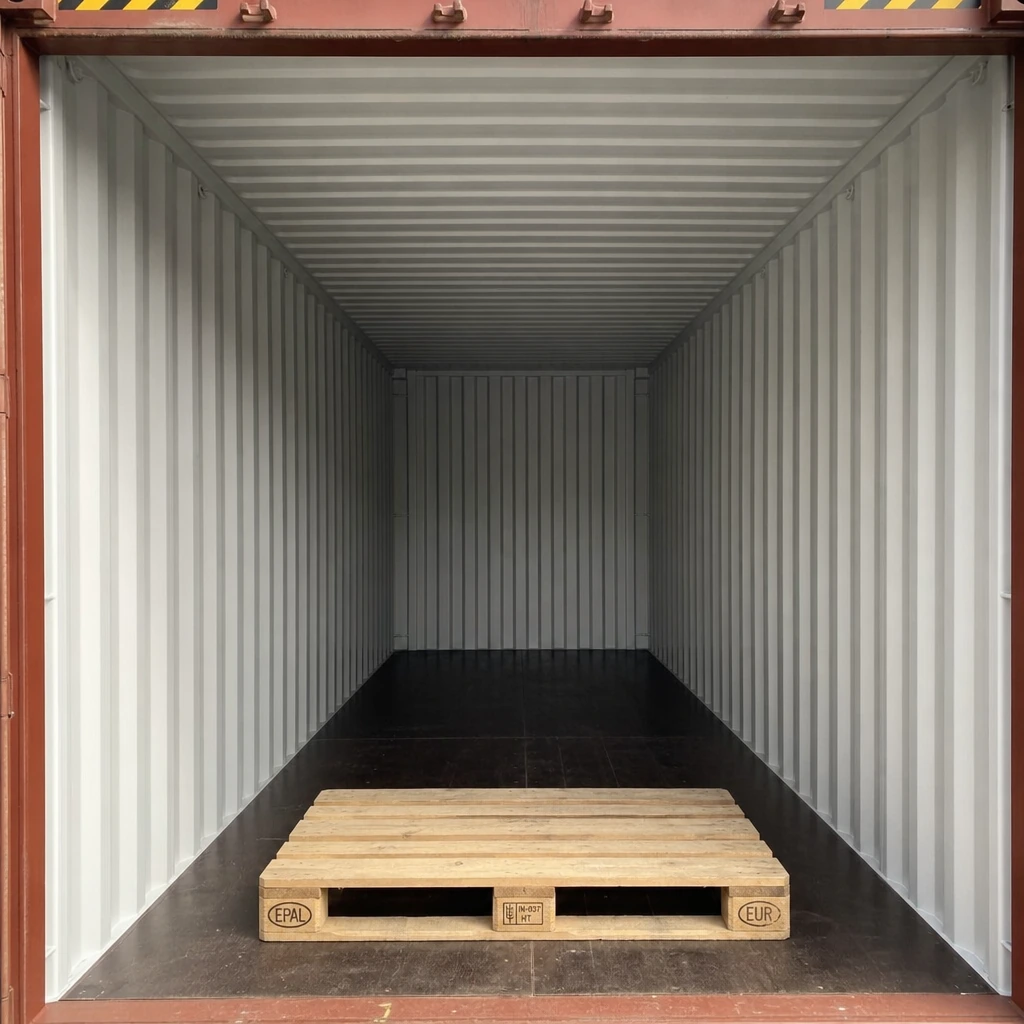
Solid-timber packaging and dunnage must meet applicable treatment and bark-tolerance conditions. Accepted ISPM 15 treatment is one pathway; an acceptable BICON alternative may apply. Bamboo, plywood, reconstituted wood and mixed-material packaging should not be treated as one category. [6]
Ask the packer to identify pallets, crates, bearers, braces and dunnage, including timber added during final loading. Obtain required declarations and treatment evidence, and photograph relevant marks. A photograph alone does not establish compliance or replace required records.
For containerised sea cargo, packing declarations are generally required for FCL and LCL consignments, subject to the relevant exceptions. DAFF's timber-packaging guidance does not require this packing declaration for air and break-bulk cargo, although those shipments still face applicable biosecurity conditions. [6]
Keep cargo and containers clean
Check the container inside and outside for soil, insects, snails, grain and plant or animal material. Give the supplier cleanliness instructions before packing, obtain photographs and confirm who will complete any required declaration. Inspection, cleaning or treatment can affect both cost and delivery timing.
For machinery, disclose whether it is used, field-tested or exposed to soil or other contamination, then check the applicable BICON pathway. Do not assume “new” answers every biosecurity question.
Check seasonal pest measures against the actual shipment
Brown marmorated stink bug (BMSB) measures depend on the goods, shipment date, origin and routing. Under DAFF's guidance reviewed on 10 November 2026, China is subject to heightened vessel surveillance and emerging-risk inspections. Target high-risk goods sent by air from China between 1 September and 30 April can face random inspection; that airfreight provision does not itself require BMSB treatment. [7]
Do not turn this into a rule that every shipment from China needs fumigation. Equally, do not assume an air booking avoids biosecurity checks. Recheck the current season's conditions before booking, especially if the goods travel through another country.
Pre-shipment and arrival checklist
Assign an owner to each action and keep the supporting records with the shipment file.
Before confirming the purchase
- Identify the product, materials, intended use and new or used condition.
- Ask the broker to resolve classification, valuation and restricted-goods questions.
- Check the relevant BICON conditions and obtain required permits.
- Confirm any ChAFTA origin claim and the evidence needed.
- Agree the sales term, named place and responsibility for each part of the journey.
Before booking and loading
- Obtain final packed measurements, weights and package counts.
- Compare suitable modes using the same pickup, delivery and cargo details.
- Record included, excluded and conditional charges.
- Verify packaging materials, required treatment evidence and container cleanliness.
- Check seasonal measures and have the document pack reviewed.
- Close unresolved issues before authorising shipment.
Before collection in Australia
- Confirm customs and biosecurity release separately.
- Resolve outstanding inspection, treatment or information requests.
- Check terminal or warehouse availability, collection deadlines and container-return requirements.
- Confirm receiving hours, vehicle access and unloading arrangements.
- Retain declarations, release records, supporting evidence and final invoices.
Frequently asked questions
Is air freight always the best option for a small shipment?
No. Compare courier, air and LCL services against the packed cargo, deadline and delivery scope. Minimum charges, dimensional weight and destination fees can change the result. Small size alone does not identify the best service.
Does door-to-door shipping include Australian duty and GST?
Not automatically. Door-to-door describes a delivery scope. Confirm the sales term, importer arrangements, clearance responsibilities and included taxes in writing.
Does every wooden pallet need fumigation?
No. Fumigation is not the only possible treatment pathway. Check the actual material, accepted treatment, marking and evidence against current DAFF/BICON conditions. Do not use an illustrative stamp as a compliance reference.
Can I collect cargo as soon as the vessel or flight arrives?
Arrival is one milestone. Confirm customs release, biosecurity release, carrier or terminal release and actual cargo availability before arranging collection.
Plan the delivery, not just the departure
Work backwards from the date the goods must be available to use. A clear plan covers supplier handover, export processing, departure, arrival, clearance and final delivery, with estimated dates kept separate from confirmed events.
To discuss a China-to-Australia shipment with Ysclink, send the goods description, packed dimensions and weight, collection location, Australian delivery postcode, cargo-ready date and required delivery date. Include any special handling or packaging requirements. The team can review the cargo, route and service scope.
Official references
- Australian Border Force: Import declarations
- Australian Border Force: GST and other taxes
- DFAT: ChAFTA certificates and declarations of origin
- DAFF: BICON import conditions
- DAFF: Applying for a BICON import permit
- DAFF: Timber and bamboo packaging
- DAFF: Seasonal BMSB measures
Regulatory guidance reviewed on 10 November 2026. Requirements vary by product and shipment and may change; confirm the applicable conditions with the responsible broker and Australian authorities before booking.